|
|
|
|
|
|
|
|
|
|
|
|
|
|
|
|
|
|
|
|
|
|
|
|
|
|
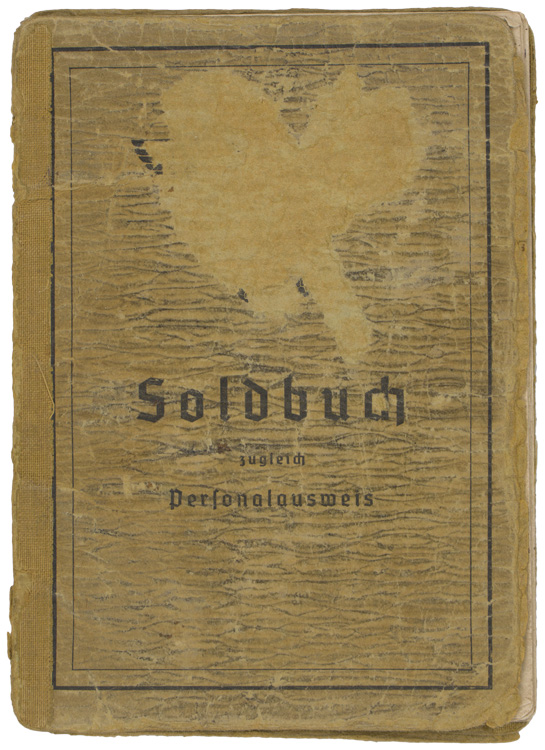
H028094 SOLDBUCH. (Soldbuch)
BACKGROUND: With the reintroduction of conscription in 1935, the OKW, Oberkommando der Wehrmacht, (High Command of the Armed Forces), activated the WEDs, Wehrersatzdienststelle, (Recruiting Offices), throughout Germany to process and administer the call up procedure. When individuals received their registration notice they were to report to the appropriate recruitment center where they would be issued a Wehrpass, (Military Pass), until they were inducted into active duty. Starting in the autumn of 1939, when an individual was inducted into active military service the Wehrpass was exchanged at the recruitment office for the Soldbuch, (Pay Book), which remained in the recipient’s possession as his official military identification document. The recruitment office would retain the Wehrpass and chronicle the individual’s active service record in it. Generally if the individual was killed in battle the Wehrpass would be forwarded to his next of kin as a memento of his service time, while the Soldbuch would be returned to the appropriate WEDs, Wehrersatzdienststelle, (Recruiting Offices), for inclusion in the individual’s official records. Regulations concerning handling of the Soldbuch were quite strict and although an individual had to present his Soldbuch to higher ranking, military police and guard personnel, as requested, the Soldbuch was not to leave the owner’s sight and be returned immediately after examined. The only instance, besides death, that regulations permitted a Soldbuch to leave the recipient’s possession was in the case of legal arrest. Of Note: Heer, (Army), Luftwaffe, (Air Force), and Waffen SS, Schutz Staffel, (Armed Protection Squad), security and precaution regulations to have a photograph of the recipient placed in the Soldbuch wasn’t enacted until mid November 1943, while Kriegsmarine, ({War} Navy), regulations decreed the Soldbuch's were to have the recipient’s photograph applied as early as September 1941. The Heer, Luftwaffe and Waffen SS regulations stated that training units have the photographs applied in the Soldbuch by April 1944 and combat units by December 1944, although the regulations were not always strictly adhered to. Of Interest: The Reich conscription laws of 1935 dictated that each of the three branches of service would be allocated a percentage of the available recruits according to their manpower requirements with the Heer being allotted the lions share of roughly 66% of eligible personnel followed by the Luftwaffe who were accorded roughly 25% with the Kriegsmarine receiving the remaining 9% of personnel. Also Of Interest: In January 1945 the Ergänzungsstelle der Waffen SS was combined with the army’s Wehrersatzdienststelle and was renamed Ergänzungsstellen des Heeres und der Waffen SS, (Replacement Centers of the Army and the Armed SS). Also Of Note: It appears that the majority of Soldbuch's and Wehrpass's were manufactured by the Metten & Co, Nationaler Werbedruck firm of Berlin SW 61, "Metten & Company National Recruiting/Enlistment Printing 61 Southwest Berlin).
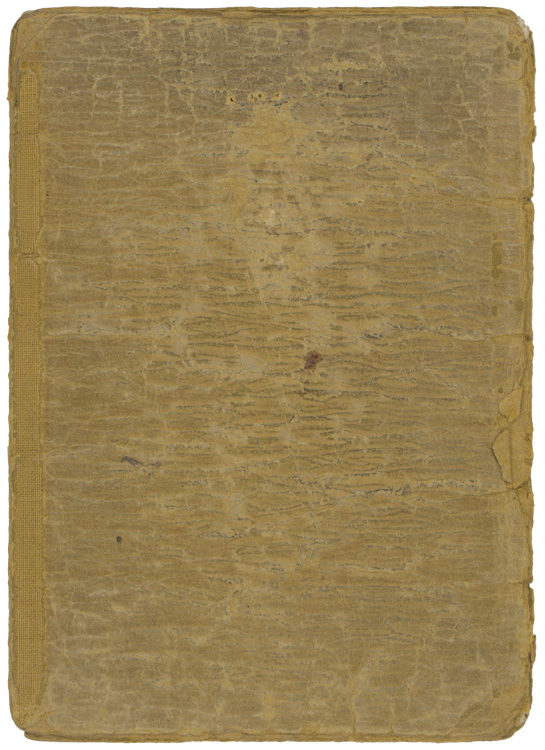
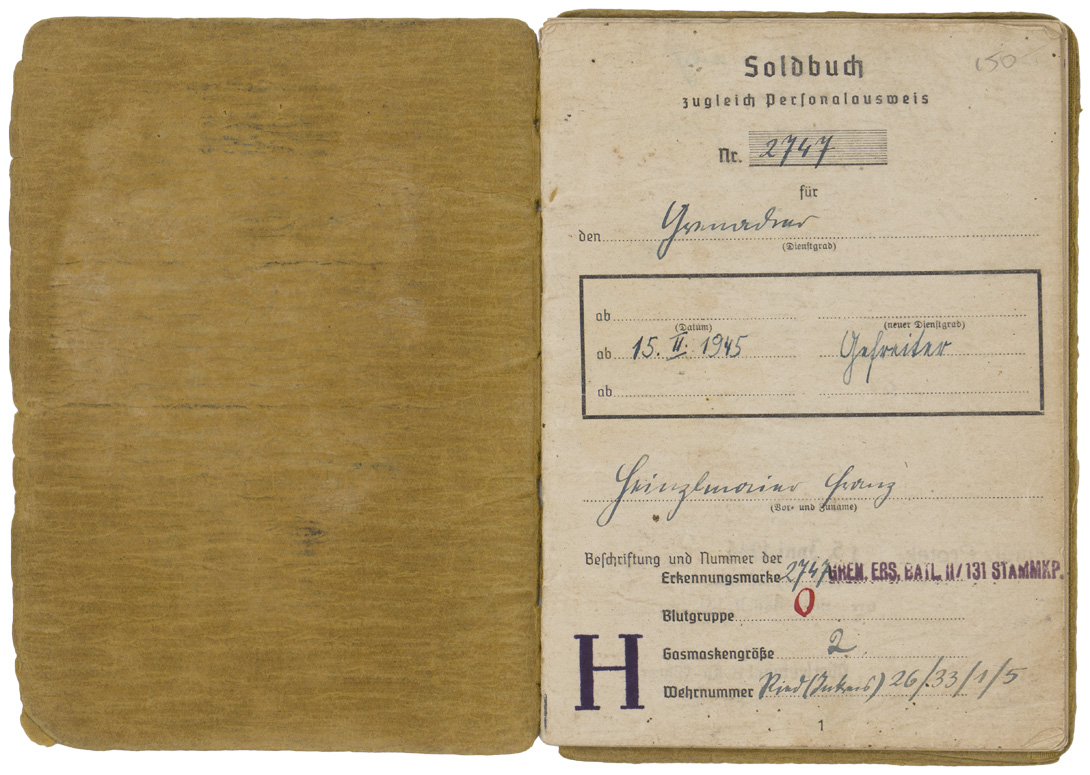
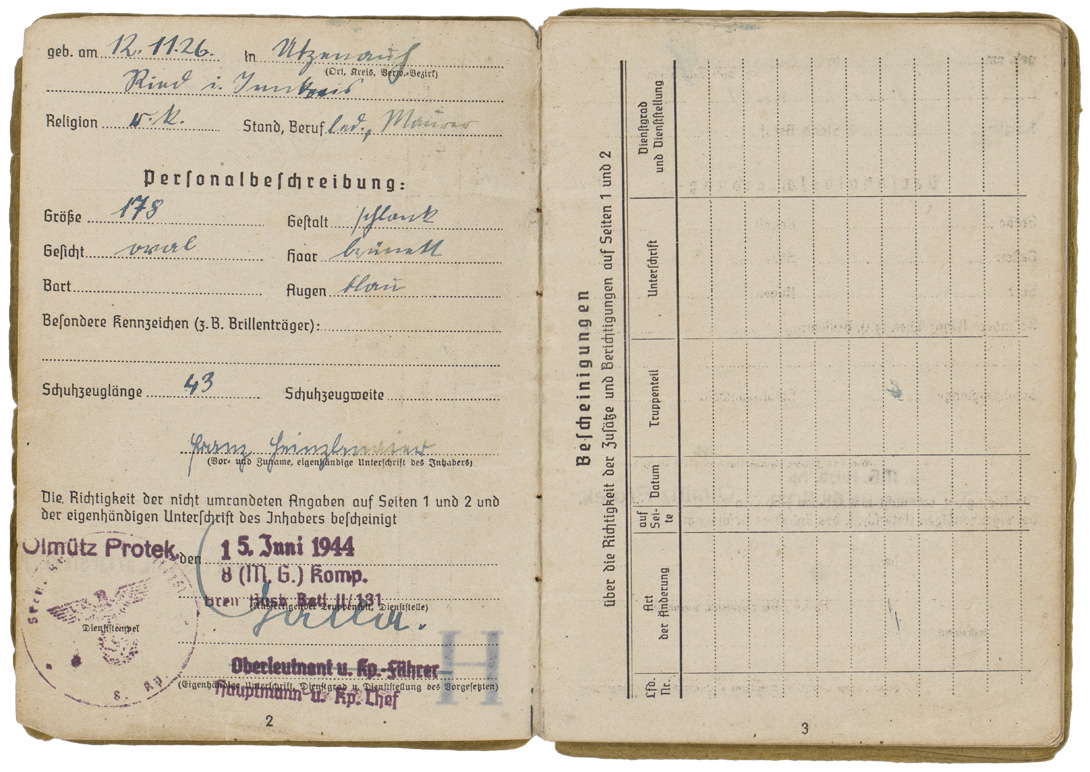
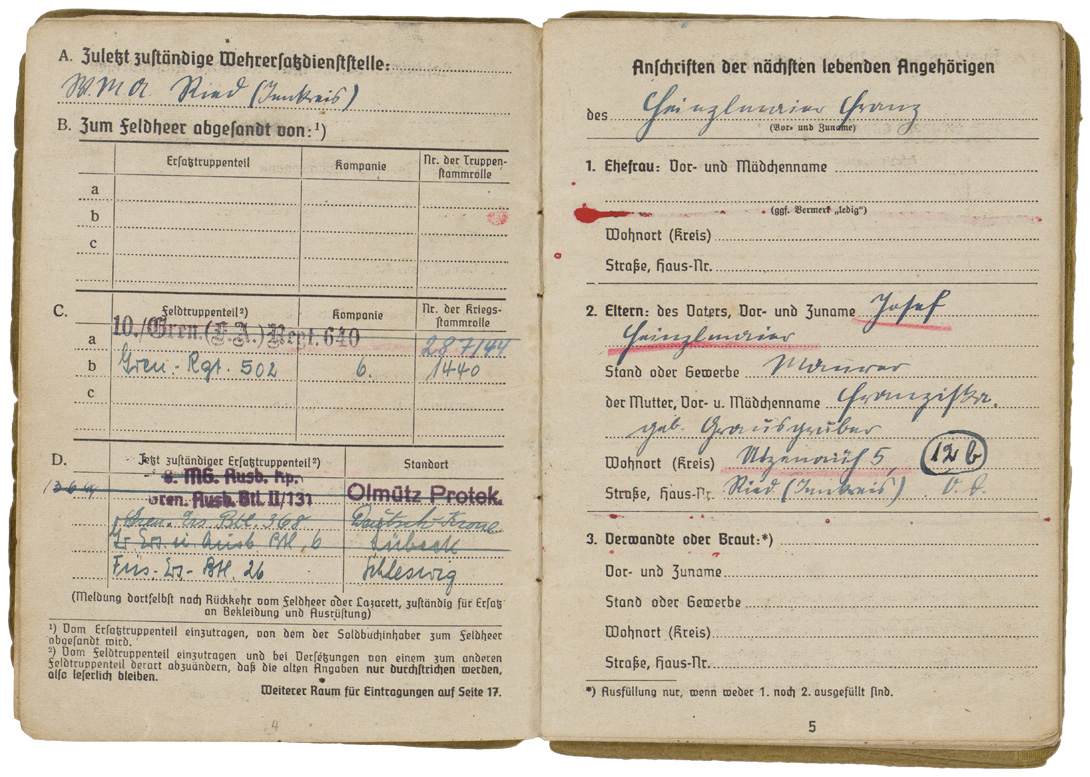
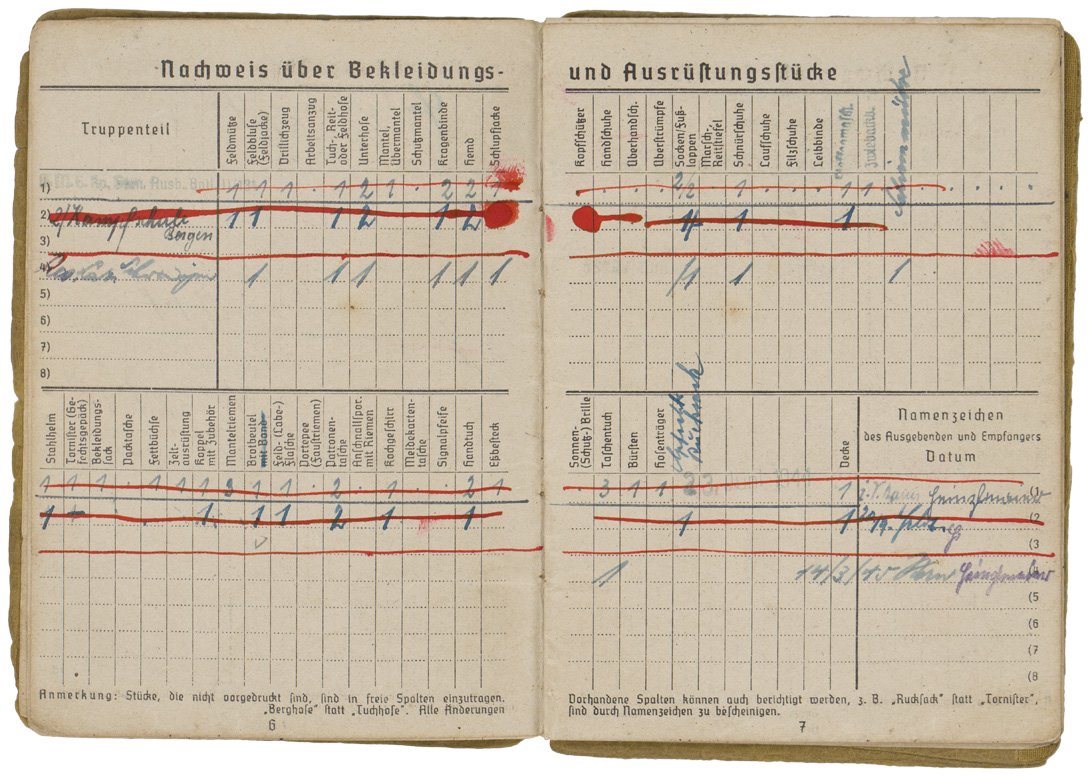
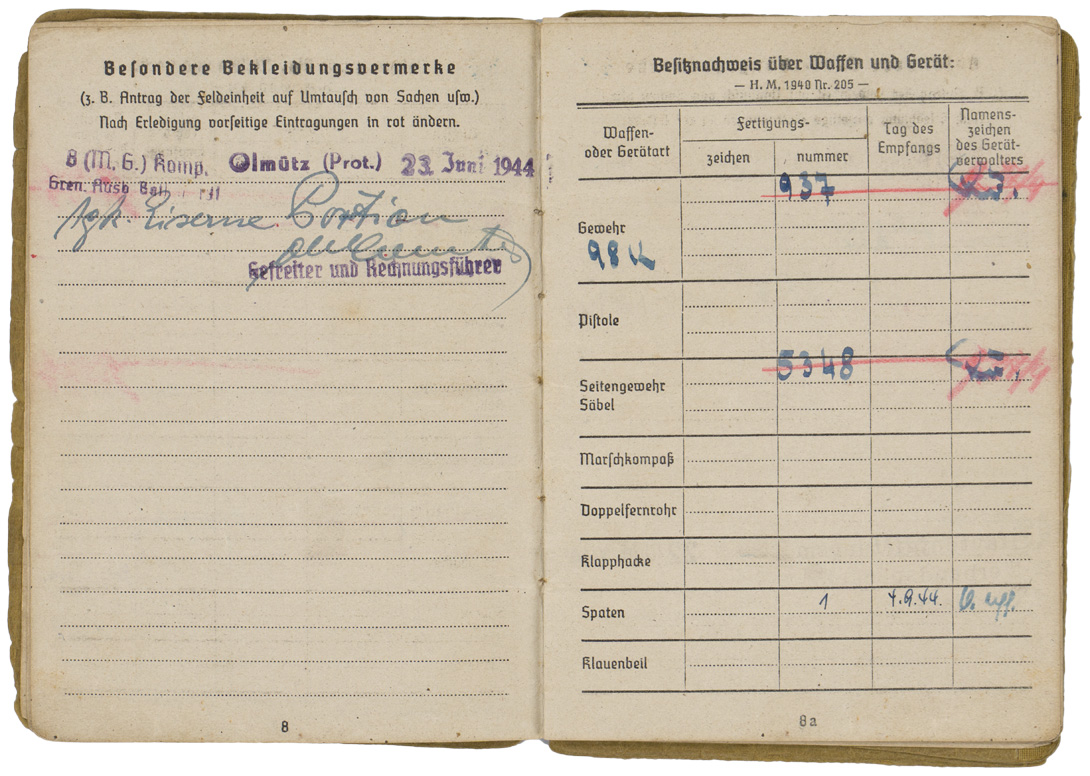
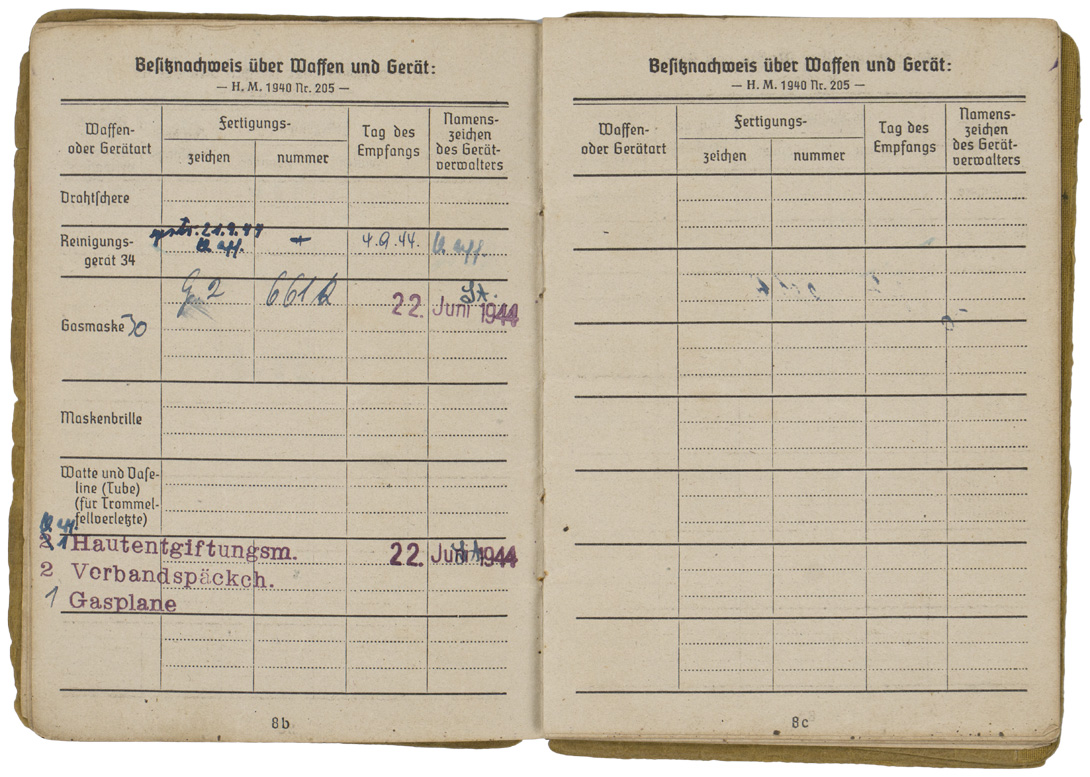
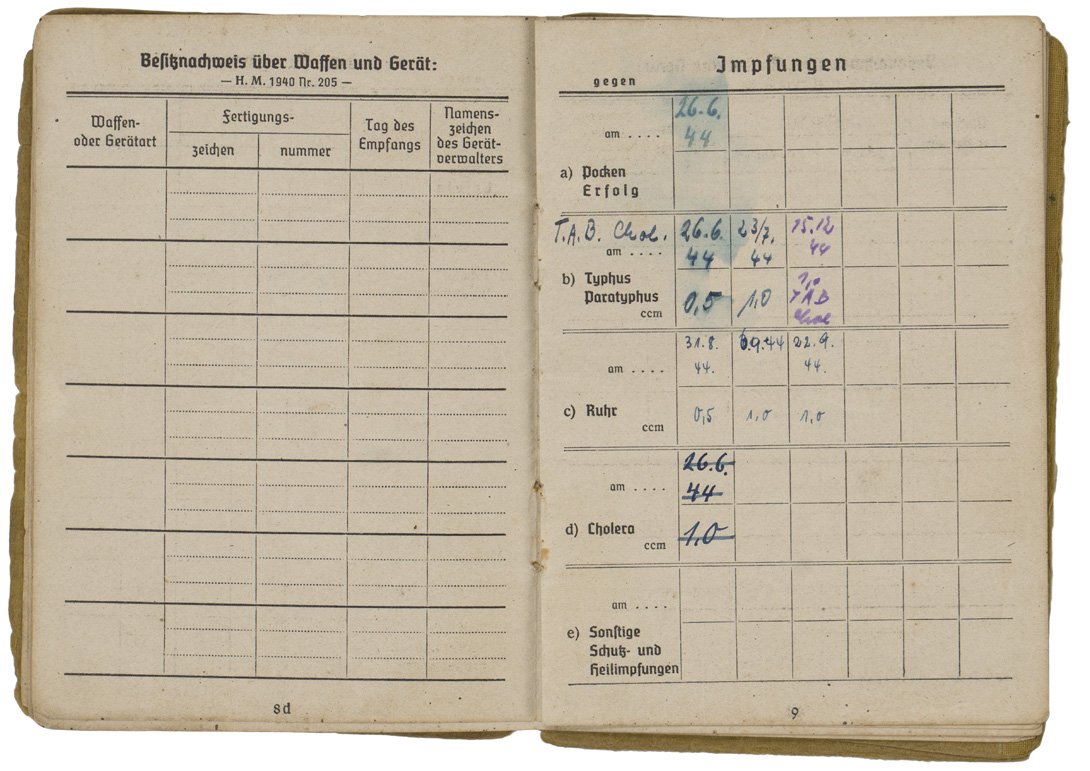
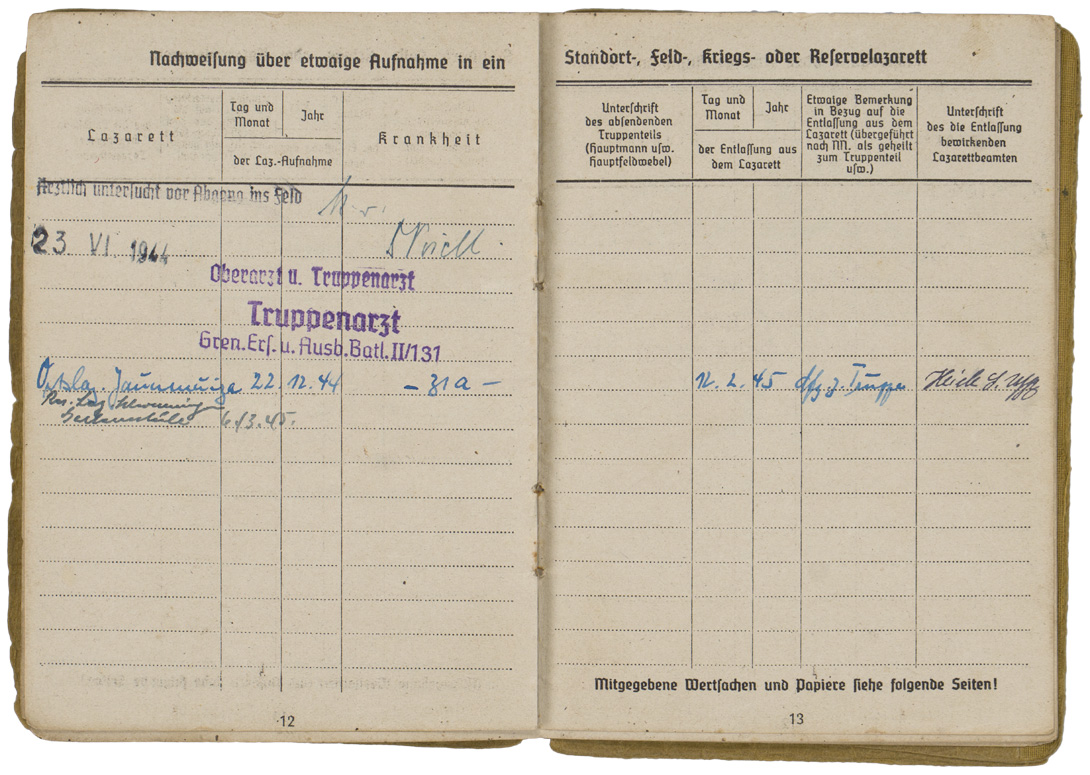
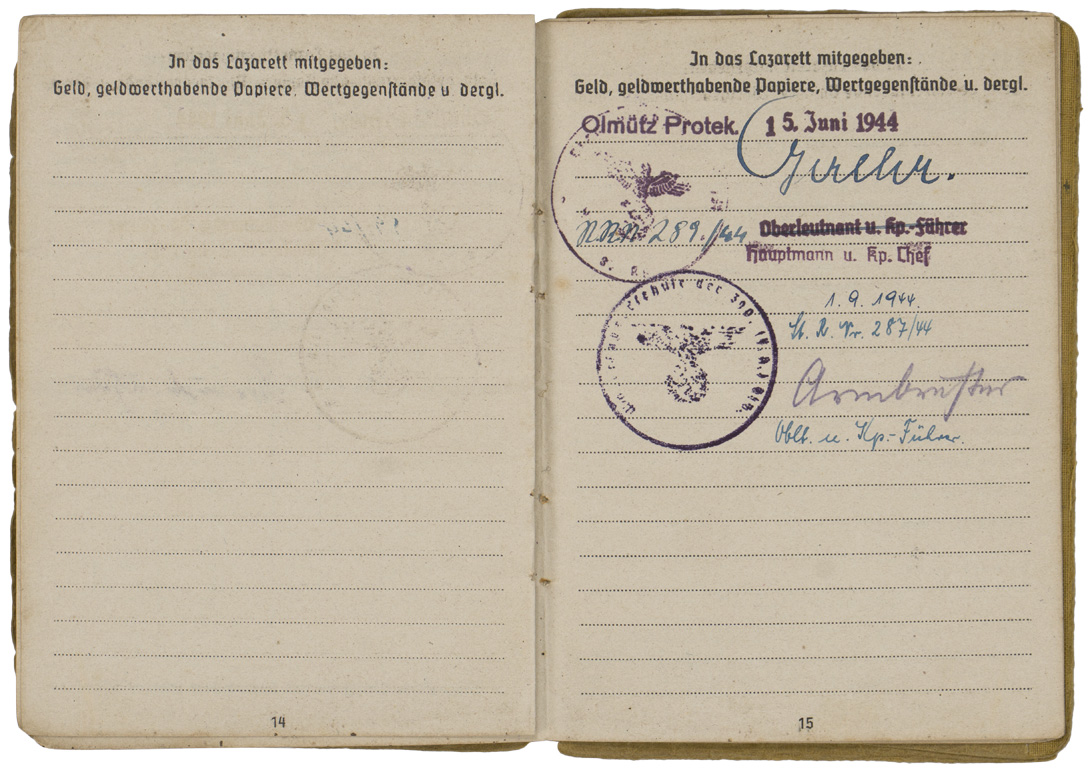
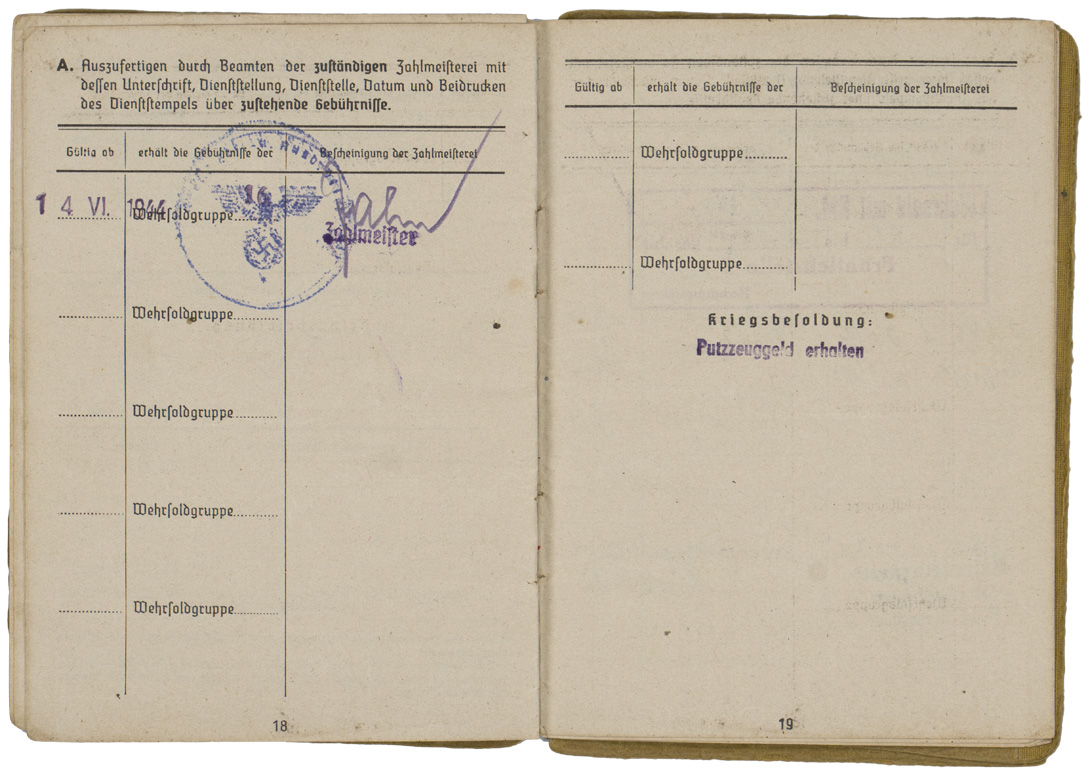
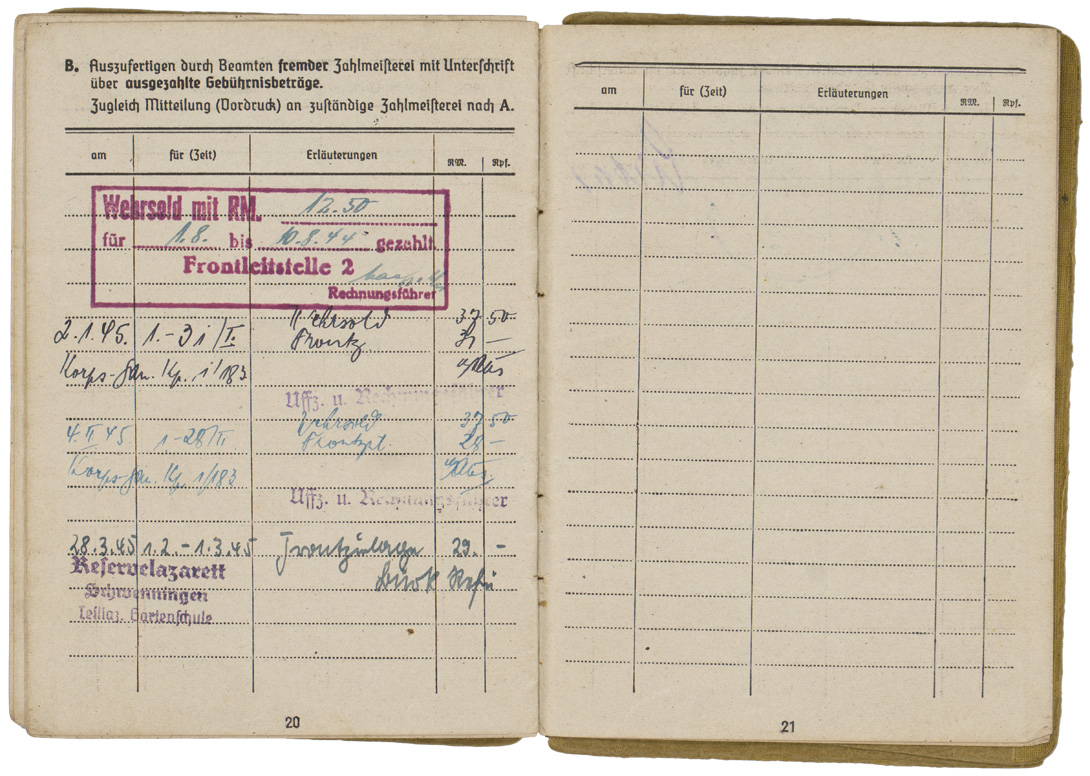
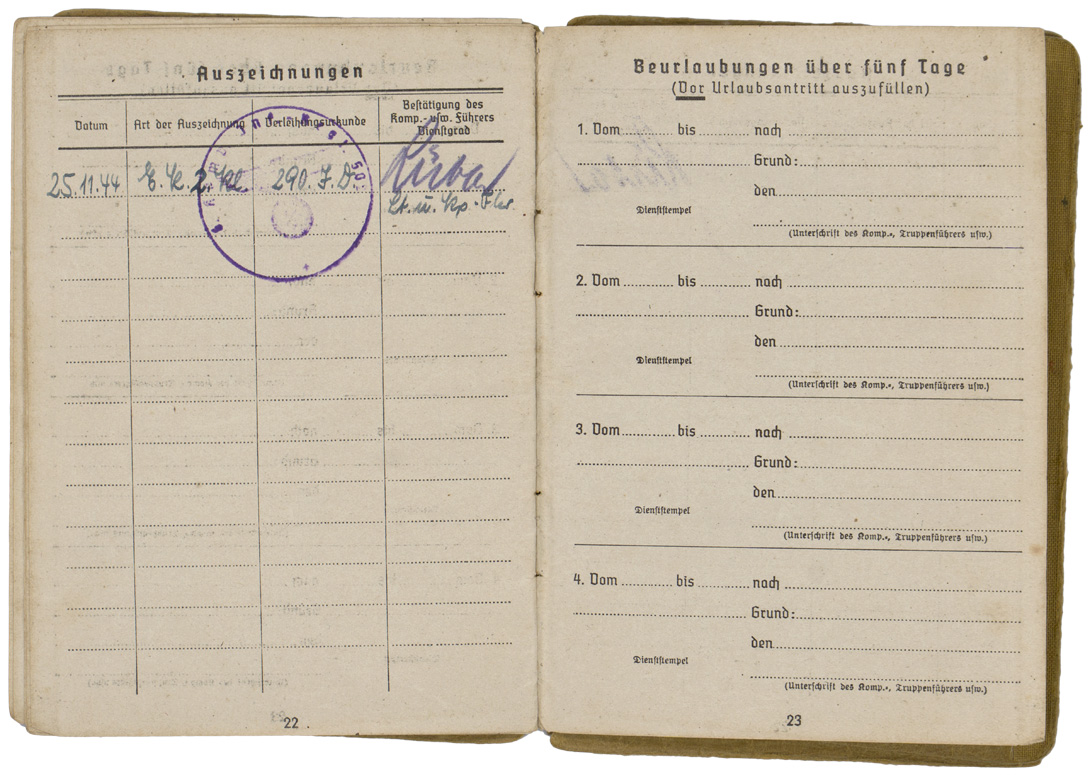
PHYSICAL DESCRIPTION: WW2 German Army Soldbuch. Carried by Gefreiter Franz Heinzlmaier, who was age 17 when he arrived on the Russian Front. Born 12 November 1926, Soldbuch started 15 June 1944. He served in the 8th (Machine Gun) Kompanie of Grenadier Regiment 502 of the 290th Infantry Division (Army Group North) which used an upright sword as its regimental insignia. Heinzlmaier earned the Iron Cross Second Class on November 25, 1944 and the Soldbuch has the comparatively rare entry for a bullet wound (31A) on 22 December 1944 but the war ended before he was awarded the Wound Badge in Black. More than 95 percent of wound entries in Soldbuecher are 31D (shrapnel) reflecting the overwhelming role of artillery in WW2, especially on the Russian Front. The wound saved Heinzlmaier’s life -- he was evacuated to a hospital in Germany and not captured by the Soviet Army as was most of the 290th ID (which was tantamount to a death sentence in Siberia). Denazified cover (cover only: the pages are not denazified). Never had a photo, all pages present and intact, some minor documents tucked into the rear cover pocket. Nice Soldbuch to a young Russian Front soldier.
GRADE *** 3/4
PRICE $ 
To Order this item, please use one of the two e-mail addresses below to contact us. Please make sure to quote the item number in your e-mail
MILITARIA WANTED! If you have items for sale, please contact us. We specialize in selling single pieces and entire collections. Over 3 decades in the business and we do all the work for you. Get the best return for your investment.
-E-Mail Address pawmac@nbnet.nb.ca Or guild@nb.aibn.com
To return to the main page please CLICK below